Skip to product information
1 of 2
Kenya

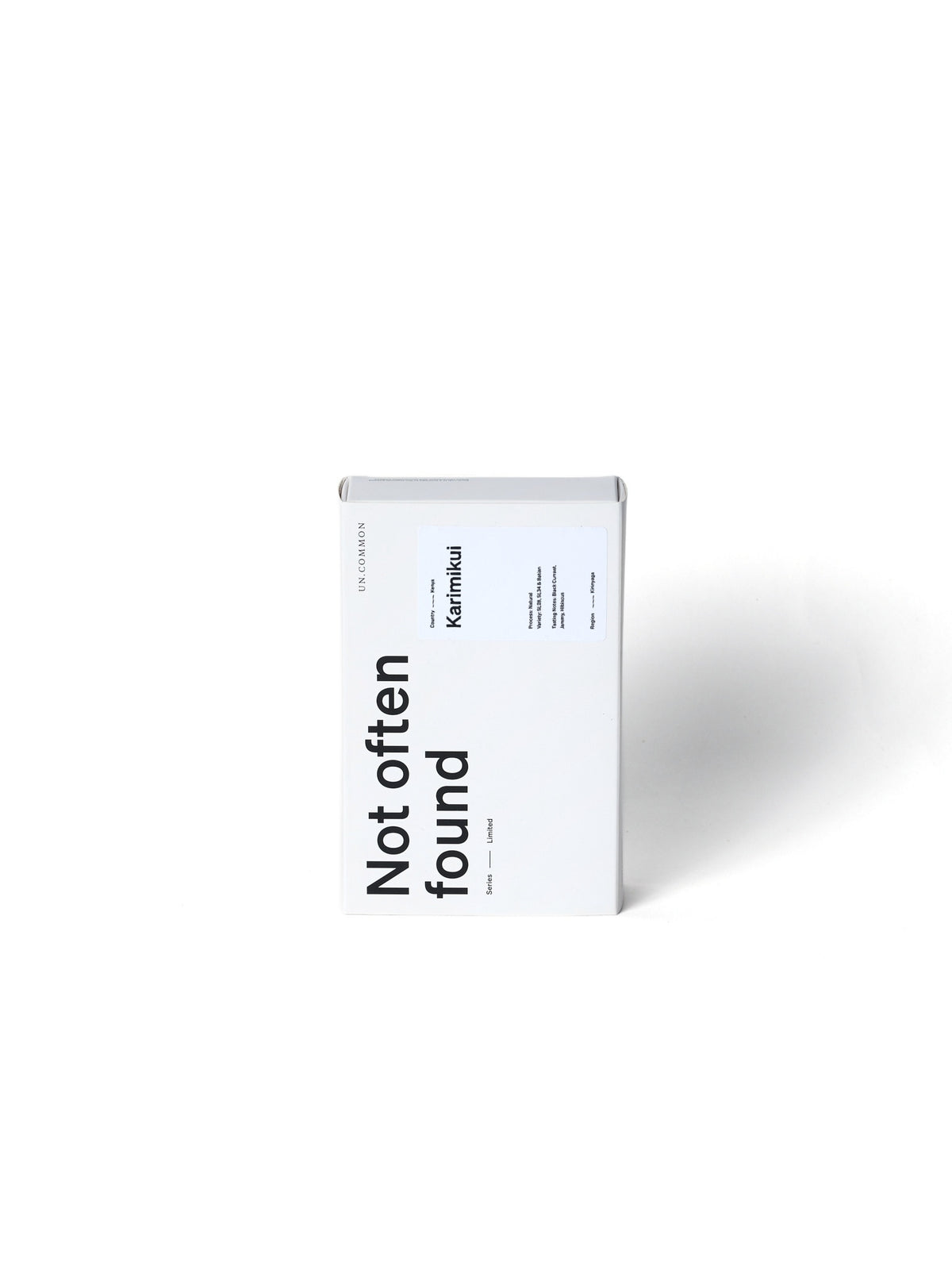
Karimikui

Kenyan Energy! This is a lively coffee from smallholder farmers on the slopes of Mount Kenya, processed at the Karimikui factory. The factory uses the cold, mountain water from the Kii river to produce exceptionally bright, clean washed coffees. In addition, they have produced some elegant naturals, expressed in this example. This is well-processed, high altitude, SL-variety Kenyan coffee. Expect a bright, vibrant coffee with notes of black currant, raspberry jam and hibiscus!

SL28, SL34 & Batian
Natural
Regular price €17,00
Regular price Sale price €17,00
Sale Sold out
Quantity
Kenya
Kenya

Karimikui Coffee Factory sits in Kirinyaga County on the slopes of Mount Kenya, where smallholder farmers grow coffee at around 1,600–1,800 metres above sea level. The farms are set in fertile volcanic soils, with SL28 and SL34 forming the main varieties, alongside Ruiru 11 and Batian. The factory is best known for its clean, bright washed coffees. For this Natural lot, ripe cherries are sorted and dried whole on raised beds, letting the fruit shape a sweeter, juicier cup.

Karimikui is managed by the Rung’eto Farmers Cooperative Society, bringing together thousands of smallholder coffee growers across the area. The factory serves the villages of Githureia, Gituba and Kia Mugumo, and has been operating since the 1960s. Rather than coming from a single estate, this coffee represents the combined harvests of many small farms, with the factory sorting and processing their cherries into export-ready lots.

Karimikui is part of the Rung’eto Farmers Cooperative Society, which helps members invest in their farms and their families’ futures. Through cooperative initiatives, farmers can access agronomy training to manage coffee diseases and improve yields, while wider member support includes school fees and health insurance. The cooperative also operates a savings and credit scheme, giving members a way to access finance beyond the coffee harvest. Together, these services help strengthen the livelihoods behind Karimikui’s coffee, not just the quality of the crop.